

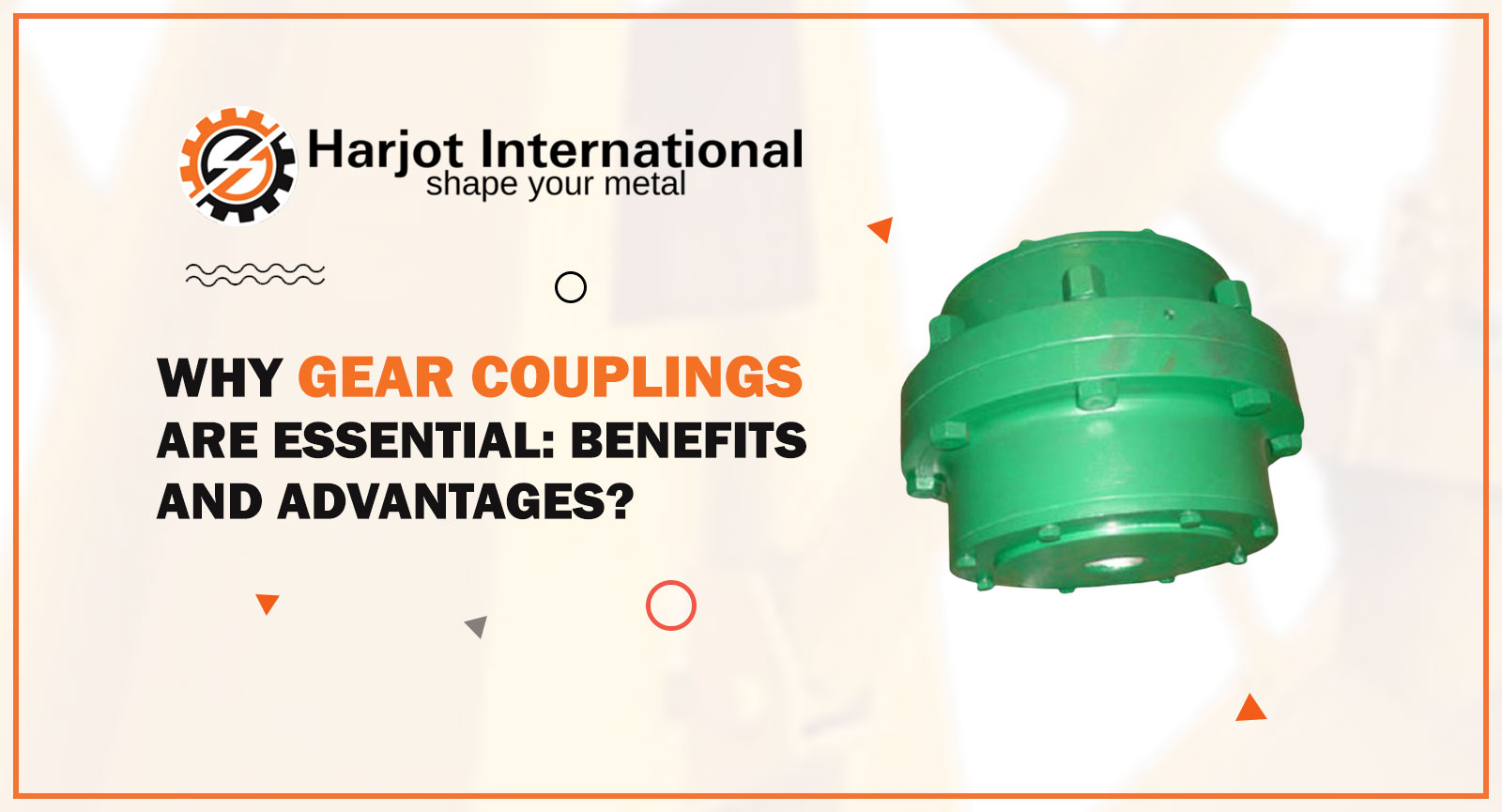
In heavy industries, machines do not work alone. Everything depends on how power moves from one part to another. If you have a massive motor trying to turn a heavy pump or a conveyor belt, they need to be connected perfectly with the help of shafts. But connecting two rotating shafts is not as simple as it sounds. You need a gear coupling to connect these shafts.
Shafts are rarely aligned 100% perfectly. If the connection is weak, the whole system can fail. A tiny bit of vibration or a slight tilt can snap a rigid connection like a toothpick. That’s where these couplers become important. It’s designed to handle high torque while making sure a little bit of misalignment doesn’t shut down your entire machinery.
If you are planning to purchase couplings in bulk, read this blog post so you can make a better decision. In this blog, we will explain everything including gear coupling types, benefits, and uses.
What is Gear Coupling
It is a mechanical device used to connect two rotating shafts. Its main job is to transmit torque from one shaft to another while handling slight misalignment between them. In simple terms, it connects two machines and allows them to rotate together without damage.
Unlike simple rigid couplings, gear couplers have external and internal teeth. These teeth mesh together and allow slight angular, parallel, or axial misalignment. Because of this design, they are strong and flexible at the same time.
Common Applications of Gear Couplings
- Steel plants
- Cement industries
- Power generation units
- Mining equipment
- Paper and pulp industries
Some Top Benefits: Why Gear Coupling is Important?
If you are looking to buy in bulk for a large-scale industrial project, you aren’t just looking for a part; you are looking for reliability. Here is why couplings are the go-to choice:
High Torque Density:
Compared to other flexible couplings, gear versions can handle a massive amount of power in a relatively small size. This is perfect for heavy-duty steel mills or cement plants.
Misalignment Tolerance:
No matter how good your engineers are, shafts move over time due to heat or floor vibrations. Gear couplings absorb these errors so your machines don’t grind to a halt.
Long Life Span:
If you keep them lubricated, a high-quality coupling can last for years under the most brutal conditions.
Torsional Rigidity:
They transmit power very accurately without lag, which is vital for machines that need to start and stop precisely.
Understanding the Different Gear Coupling Types
Depending on the load you are moving and the space you have, you can’t just pick any random connector. You need to understand the specific coupling types available in the market to make a smart investment.
Full Gear Couplings:
These have double engagement, meaning they have two sets of teeth. These are the gold standard for handling large amounts of parallel and angular misalignment.
Half Gear Half Rigid Couplings:
These are used when you have one shaft that is perfectly fixed and another that might move a bit.
Spacer Gear Couplings:
If your motor and your machine are far apart, these come with a spacer in the middle to bridge the gap while still keeping things flexible.
Flanged Gear Couplings:
These are very popular in heavy industries because they consist of sleeves with external flanges that are bolted together. They are incredibly easy to maintain and very strong.
Conclusion
If you need high-quality gear coupling, Harjot International is one of the best brands. We make and sell durable coupling solutions at reasonable prices. Our products are made up of quality components to handle the heavy-duty requirements of the industrial sector.
Whether you need these couplings in bulk or need specialized products for a custom project, we provide the technical expertise and robust construction you need. Reach out to us today and get the strength your machinery deserves.

Harjot International
With over 25 years of experience, Harjot International, based in Punjab, India, has built a strong reputation as a trusted provider of heavy industrial machinery.