

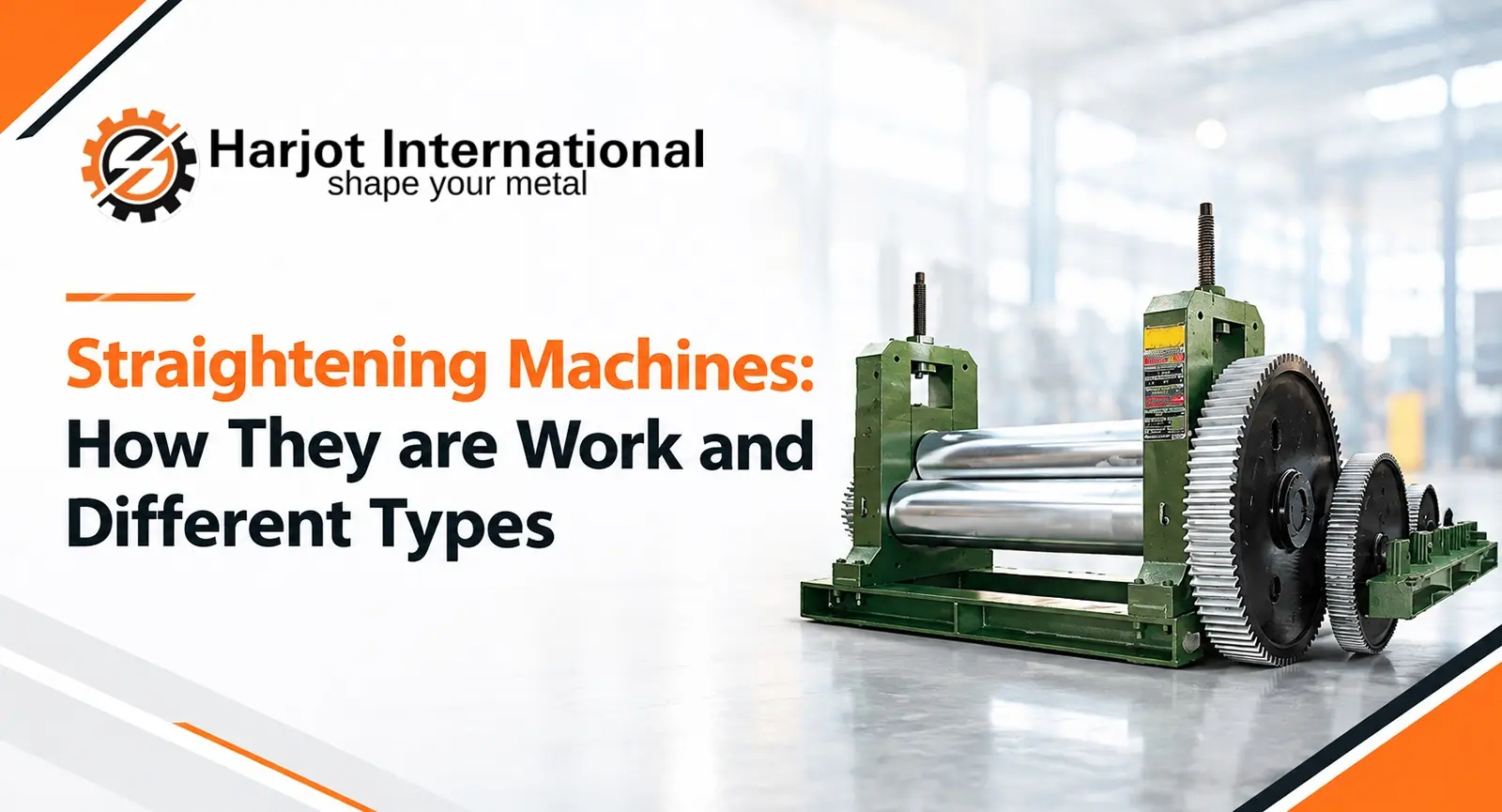
Quick Summary: Metal rarely comes off a rolling or forming line perfectly flat. This blog explains why that happens, how a straightening machine fixes it by bending metal back and forth through a set of rollers, and the five main types built for different products: plate and sheet, pipe and tube, wire, angle and section, and TMT rod or bar. It also covers what decides whether the finished material is truly straight, and where straightening lines go wrong.
Introduction
A bent bar on the shop floor rarely looks like a big problem at first, just a small curve in the steel, easy enough to ignore until it jams a machine, throws off a weld, or gets rejected by a customer who measured it more carefully than you did. That small curve is the cost of skipping proper straightening, and it’s why Straightening Machines have become such a standard part of metal processing rather than an optional add-on. Rolling, forging, cutting, even the way material is placed during transport- all of it leaves behind tiny bends and camber that build up until the metal simply won’t work the way the next process needs it to.
What surprises a lot of people new to this equipment is just how specific the fix has to be. A wire doesn’t bend the way a plate does, and a TMT bar certainly doesn’t react like a structural angle, so the roller setup that straightens one would barely touch the other. This blog covers the mechanics behind a straightening machine, the different types built for Plate/Sheet Straightening Machine, Pipe/Tube Straightening Machine, Wire Straightening Machine, Angle/Section Straightening Machine, and TMT Rod/Bar Straightening Machine, and the details that decide whether a batch of material comes out straight or just looks that way until someone puts it under load.
What Does a Straightening Machine Do?
A straightening machine takes the bend, camber, or twist out of metal stock so it meets flatness or straightness tolerances before it moves to the next stage. That sounds minor until you see what happens when it’s skipped. A pipe with even a slight bend won’t thread or weld cleanly. A plate with camber throws off a laser cutting pattern the moment it’s clamped down.
The fix isn’t heat, and it isn’t a single hard press. The workpiece runs continuously through a set of rollers arranged to bend it slightly, first one way, then the other, a process most people in the industry just call roller leveling. Each pass shaves off a bit more of the deviation, and by the time the material clears the last roller, the bend is gone.
How Does a Straightening Machine Work?
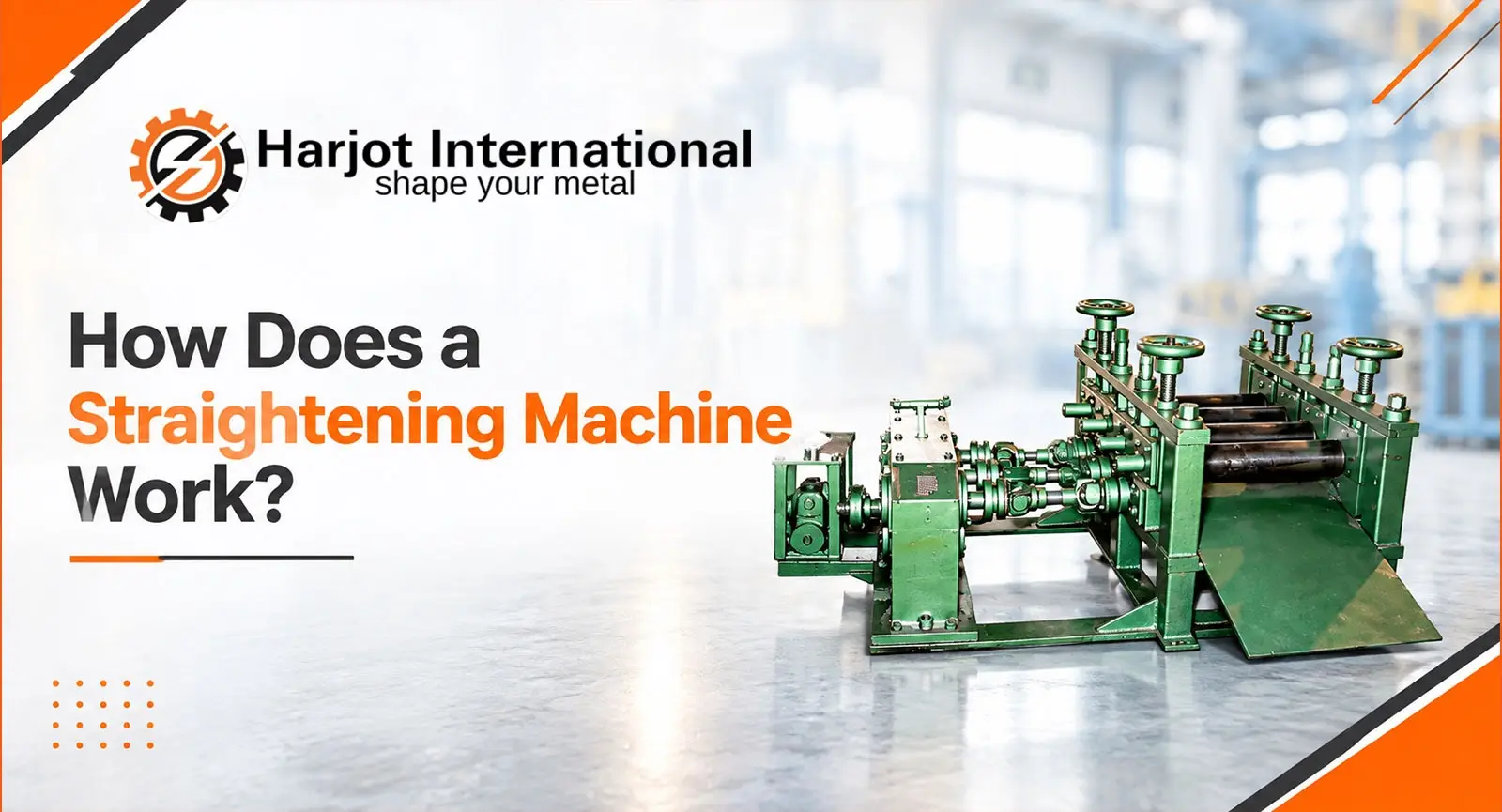
The working principle of this straightening machine comes down to one idea: controlled, repeated bending. The Machine works in the following way:
- Staggered rollers. The upper and lower rollers are offset from each other, so the material gets pushed up, then down, then up again in a steady wave as it moves through.
- Shrinking bend amplitude. The gap between rollers narrows a little at each stage, so every bend is smaller than the one before it. That’s what flattens the material out gradually instead of overcorrecting it.
- Just enough deformation. The bend has to push past the material’s elastic limit, or it springs right back to its original shape. But push too far, and you create a new problem instead of removing the old.
- Rollers built for the shape. A pipe needs concave rollers that cradle its curve. A plate needs flat rollers running its width. A wire needs small rollers packed close together. This is basically why no two straightening machines look alike once you line them up.
For round stock like pipe, tube, wire, and TMT bar, a lot of machines also spin the material as it passes through, so the correction lands evenly around the whole circumference rather than just on one side.
Types of Straightening Machines
Plate, pipe, wire, structural sections, and rebar all bend differently, so it’s no surprise each one gets its own dedicated machine. The following are the types of machines:
1. Plate and Sheet Straightening Machine
Often called a leveler, this Plate/Sheet Straightening Machine runs the plate between multiple rows of small rollers stacked above and below it, flattening out camber and waviness across the full width. More rollers usually means better flatness, which is why heavy-gauge plate headed for precision cutting or welding tends to run through machines with more roller passes than standard structural plate needs.
2. Pipe and Tube Straightening Machine
This Pipe/Tube Straightening Machine leans on cross-roll or spin-straightening, where skewed rollers rotate the pipe while pushing it forward, correcting the bend around the entire circumference in one continuous pass. Adjusting the skew angle lets the same machine handle a wide range of diameters without swapping tooling every time.
3. Wire Straightening Machine
A Wire straightening machine typically uses two roller banks set at roughly ninety degrees to each other, one fixing the bend in one plane, the other fixing it in the plane at right angles. Because wire is thin and flexes so easily, these machines pack in more rollers, spaced tighter, than a plate or pipe line would need for the same work.
4. Angle and Section Straightening Machine
Angles, channels, and beams don’t have a simple round or flat profile, so an Angle/Section Straightening Machine uses rollers shaped to match the section rather than generic flat or round rolls. It’s also common for this type to correct bend and twist at the same time, since a rolled angle can bow along its length and twist along its axis simultaneously.
5. TMT Rod and Bar Straightening Machine
TMT bars come off rolling and quenching with a bend to fix and a ribbed surface that has to stay intact, since those ribs are what give the bar its grip inside concrete. A TMT Rod/Bar Straightening Machine is built to correct the bend without flattening or damaging the ribs, and it usually has to keep pace with a continuous, high-volume rebar line.
What Affects Straightening Quality?
A handful of variables decide whether material actually comes out straight, or just looks better than it did going in. Things that affect the quality of the Straightening Machines are:
- Roller gap. Set it too tight and the material overcorrects or picks up new stress. Set it too loose and the original bend never fully clears.
- Material strength. Harder alloys need more passes or more bending force to get the same result; softer material reaches it more easily.
- How bad the incoming bend is. A batch with severe or inconsistent camber is harder to correct uniformly and often needs a slower feed rate.
- Roller condition. Worn or pitted rollers don’t just fail to fix the material; they actively stamp their own defects onto it.
How to Choose the Right Straightening Machine?
A few questions tend to sort this out fast. Here are some of the common questions that you should ask before deciding to choose this machine:
- What material and size range actually needs straightening? Roller design changes a lot between plate, pipe, wire, angle, and rebar.
- What tolerance does the next process really need? Laser cutting demands tighter flatness than general fabrication does.
- What throughput do you need, especially for continuous work like rebar or wire lines?
- Will the line see multiple product sizes? If so, adjustable rollers or interchangeable tooling matter more than they would on a single-size line.
Common Mistakes in Straightening Operations
Most straightening machine problems don’t come from bad equipment; they come from how it’s run day to day. A few habits show up again and again on shop floors, and they’re worth watching for. Some of the common mistakes are:
- Feeding material too fast for its thickness or hardness, which leaves residual bend that only shows up later, often after it’s already too late to fix cheaply.
- Letting roller maintenance slide until defects start showing up on finished material.
- Running a specialized profile like a structural angle through a general-purpose setup, which rarely corrects both bend and twist properly.
- Skipping a check on incoming material, so a batch with unusually bad camber runs at standard settings and comes out only half fixed.
None of these mistakes show sudden signs or affect the machine suddenly, but they add up, usually showing up as rework, wasted material, or a customer complaint further down the line, long after the straightening pass itself is forgotten.
Conclusion
No two products bend the same way under pressure, and that’s the whole story behind straightening machines. A Plate/Sheet Straightening Machine needs a different roller setup than a Pipe/Tube Straightening Machine, and a Wire Straightening Machine needs a different one than a TMT Rod/Bar Straightening Machine, and getting that match right separates material that’s genuinely straight from material that only looks fixed. At Harjot International, we build our straightening equipment around that idea, matching roller design to the product instead of forcing one setup to do every work well.
FAQ
What's the difference between straightening machine and leveling?
Can one machine handle more than one product type?
Why does a straightening machine pipe sometimes bend again after it's cut?
Does straightening weaken the material?
How often do straightening machine rollers need replacing?

Harjot International
With over 25 years of experience, Harjot International, based in Punjab, India, has built a strong reputation as a trusted provider of heavy industrial machinery.