

Quick Summary:
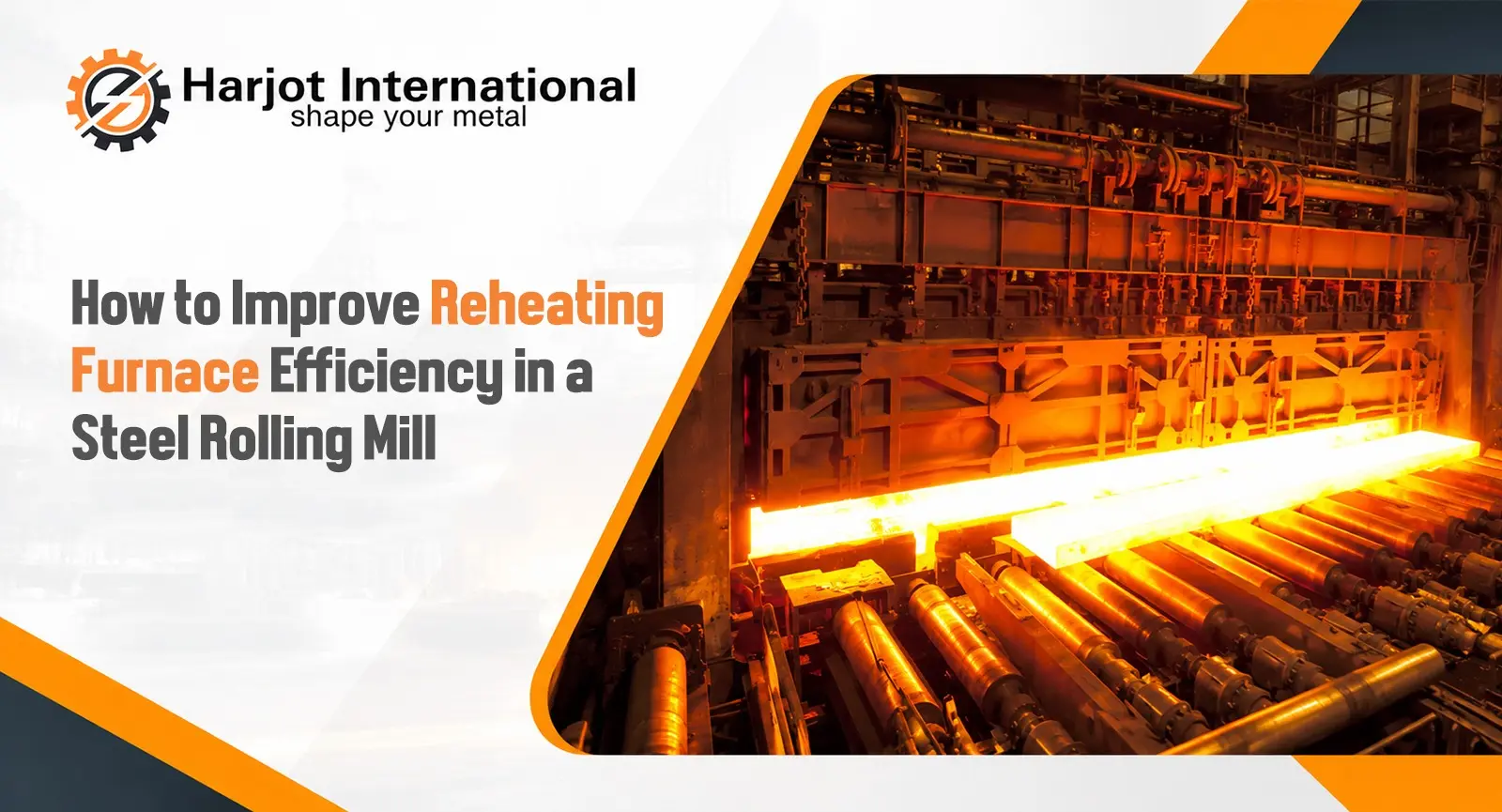
A Reheating Furnace heats steel billets, blooms or slabs to rolling temperature before they enter the mill. It is also one of the biggest fuel consumers in a rolling plant. Efficiency improves when you control the air-fuel ratio, recover waste heat, reduce heat loss through the walls and doors, and keep the furnace well maintained. Even small changes can lower fuel cost, reduce scale loss and give more uniform heating for better rolling quality.
Table of Contents
- Introduction
- What Is a Reheating Furnace?
- Why Efficiency Matters in a Rolling Mill
- Common Causes of Fuel Loss
- Practical Ways to Improve Furnace Efficiency
- Role of Furnace Type and Fuel
- Automation and Monitoring
- Maintenance Habits That Save Fuel
- How to Measure Your Furnace Performance
- Conclusion
- Frequently Asked Questions
Introduction
In most rolling mills, the fuel bill is one of the largest running costs. Furnace oil, natural gas, coal or producer gas all add up quickly, and even a small waste of heat becomes a large loss over a year.
A Reheating Furnace sits at the start of the rolling line, so its performance affects everything that follows. A poorly heated billet means rolling defects, higher power use and more rejection. This blog explains how to improve efficiency, where the common losses occur and what to check when planning a new furnace or an upgrade.
What Is a Reheating Furnace?
A Reheating Furnace is an industrial furnace that heats steel to a temperature at which it becomes soft enough to be rolled. For most steel products, this temperature is around 1,100°C to 1,250°C. Cold billets or slabs enter at one end, move slowly through the heating zones, and leave at the other end ready for rolling.
If the steel is not heated evenly, the mill faces problems. Cold spots cause rolling difficulty, higher power use and surface defects. Overheating wastes fuel and creates extra scale. This is why the furnace is often called the heart of the plant.
Common types include pusher type, walking beam and walking hearth furnaces. Each moves the material in a different way, but the basic purpose is the same.
Why Efficiency Matters in a Rolling Mill
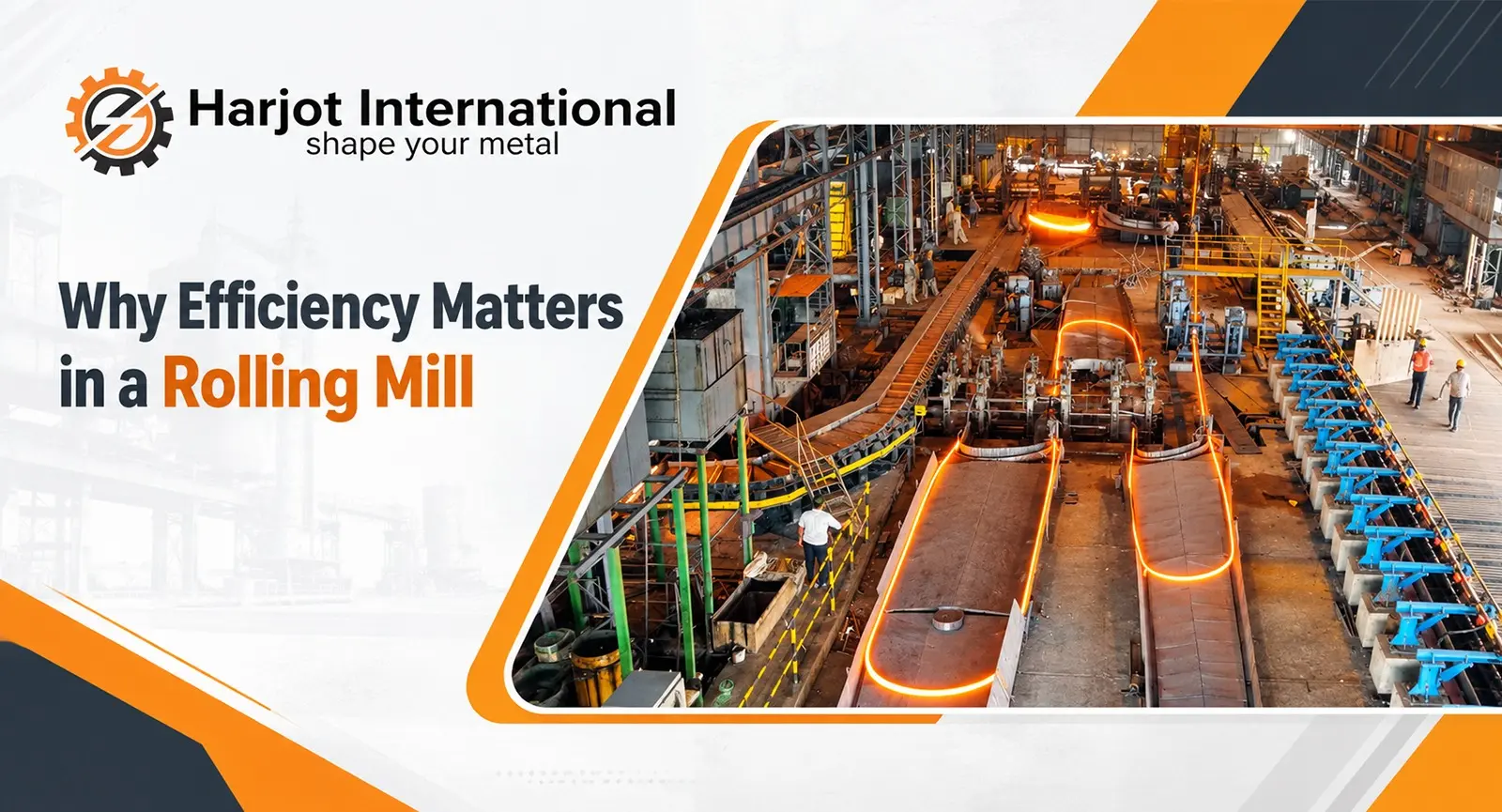
In most plants, fuel is one of the largest operating costs. A steel rolling mill furnace runs for long hours, so even a small waste of fuel per tonne adds up to a big amount over a month.
Better rolling mill furnace efficiency gives several clear gains:
- Lower fuel bills: less fuel is used for every tonne of steel heated.
- Less scale loss: good control reduces the iron that burns away as oxide scale.
- Better product quality: uniformly heated billets roll smoothly with fewer surface defects.
- Higher output: well-tuned furnaces heat faster and avoid delays.
- Lower emissions: burning less fuel means less carbon dioxide and smoke.
- Longer furnace life: stable operation reduces thermal shock to the refractory lining.
Common Causes of Fuel Loss
Before making changes, it helps to know where the heat is going. These are the most common leaks.
- Excess air: too much air cools the flame and carries heat out through the chimney.
- Hot flue gases: the exhaust leaves at a very high temperature without any heat recovery.
- Poor insulation: heat escapes through damaged walls, roof and doors.
- Air leakage: cold air enters through gaps, doors and openings.
- Long idle time: the furnace stays hot while there is no steel to roll.
- Uneven loading: gaps in the charge waste heat.
- Badly adjusted burners: poor flame shape leads to uneven heating.
Practical Ways to Improve Efficiency
The good news is that many improvements are simple and have a quick payback. A Reheating Furnace for steel rolling mill use gives the best results when these steps are taken together.
1. Control the Air-Fuel Ratio
Burners need the right amount of air to burn fuel fully. Too little air causes unburnt fuel, while too much air wastes heat. An oxygen analyser in the flue gas helps operators keep the ratio in the correct range.
2. Recover Waste Heat
Flue gases carry a large share of the heat out of the furnace. A recuperator or regenerative burner system uses this heat to pre-heat the combustion air. Hotter air means less fuel is needed to reach the same temperature.
3. Improve Insulation
Good refractory lining and ceramic fibre insulation keep heat inside the furnace. Check the roof, walls and door areas regularly, and repair cracks and worn patches quickly.
4. Maintain Furnace Pressure
A slightly positive pressure inside the furnace stops cold air from being drawn in. If the pressure goes negative, outside air enters and cools the chamber.
5. Use Hot Charging Where Possible
If billets come straight from the casting section, charging them while still warm saves a large amount of fuel. Even a rise in charging temperature helps.
6. Reduce Door Openings and Idle Time
Keep doors closed and openings small. Plan production so that the furnace is not kept at full heat while the mill is waiting.
7. Plan the Loading Pattern
A steady, well-spaced charge allows even heat transfer. Avoid large gaps, and keep the soaking time in line with the size of the billet.
Role of Furnace Type and Fuel
The design of the furnace and the type of fuel both affect performance.
- Pusher type furnaces: simple and lower in cost, and common in many mills.
- Walking beam furnaces: give more even heating and less marking on the steel, but cost more.
- Gas fuel: natural gas, LPG and producer gas burn cleanly and are easier to control.
- Liquid fuel: furnace oil is widely used but needs good atomisation and temperature control.
- Solid fuel: coal firing needs careful handling and regular cleaning.
The best choice depends on fuel availability, cost, production target and the product being rolled.
Automation and Monitoring
Manual control depends heavily on the operator’s judgement, which can change from shift to shift. Modern systems reduce this problem.
- Temperature controllers: keep each zone at its set point.
- PLC and SCADA systems: record data and help find problems early.
- Oxygen analysers: guide the air-fuel adjustment.
- Pressure sensors: help maintain stable furnace pressure.
- Flow meters: show how much fuel is used per tonne.
Even a basic level of automation can give steady savings.
Maintenance Tips That Save Fuel
Regular care protects efficiency and avoids unplanned shutdowns.
- Inspect refractory lining and repair cracks or damage promptly.
- Check door seals, skids and water-cooling lines.
- Clean burners and replace worn parts.
- Calibrate thermocouples and instruments at regular intervals.
- Check the chimney, flue ducts and dampers for blockage or leakage.
- Remove scale build-up from the furnace floor.
- Keep a maintenance log and a fuel consumption record.
How to Measure Your Furnace Performance
You cannot improve what you do not measure. Track these numbers regularly.
- Specific fuel consumption: fuel used per tonne of steel heated.
- Scale loss: the weight of steel lost as scale, often in the range of 1% to 2%.
- Flue gas temperature and oxygen level: show how much heat is being wasted.
- Heating uniformity: compare billet temperature at discharge.
- Production rate: tonnes heated per hour.
A monthly review of these figures helps your team see patterns and act early.
Conclusion
A Reheating Furnace decides how much fuel a rolling mill burns and how good the final product is. Better combustion control, heat recovery, proper insulation and trained operators can bring real savings without major changes. When planning a new unit or an upgrade, choosing the right design and checking fuel consumption figures is a wise step. For mill owners and project buyers who need a dependable partner, Harjot International offers furnace solutions designed for different rolling mill requirements.
Frequently Asked Questions
What is a Reheating Furnace used for?
How can you improve the efficiency of a Reheating Furnace?
What are the types of Reheating Furnaces?
What fuels are used in Reheating Furnaces?
What is scale loss in a Reheating Furnace?
Why is waste heat recovery important in a Reheating Furnace?
How often should a Reheating Furnace be maintained?

Harjot International
With over 25 years of experience, Harjot International, based in Punjab, India, has built a strong reputation as a trusted provider of heavy industrial machinery.