

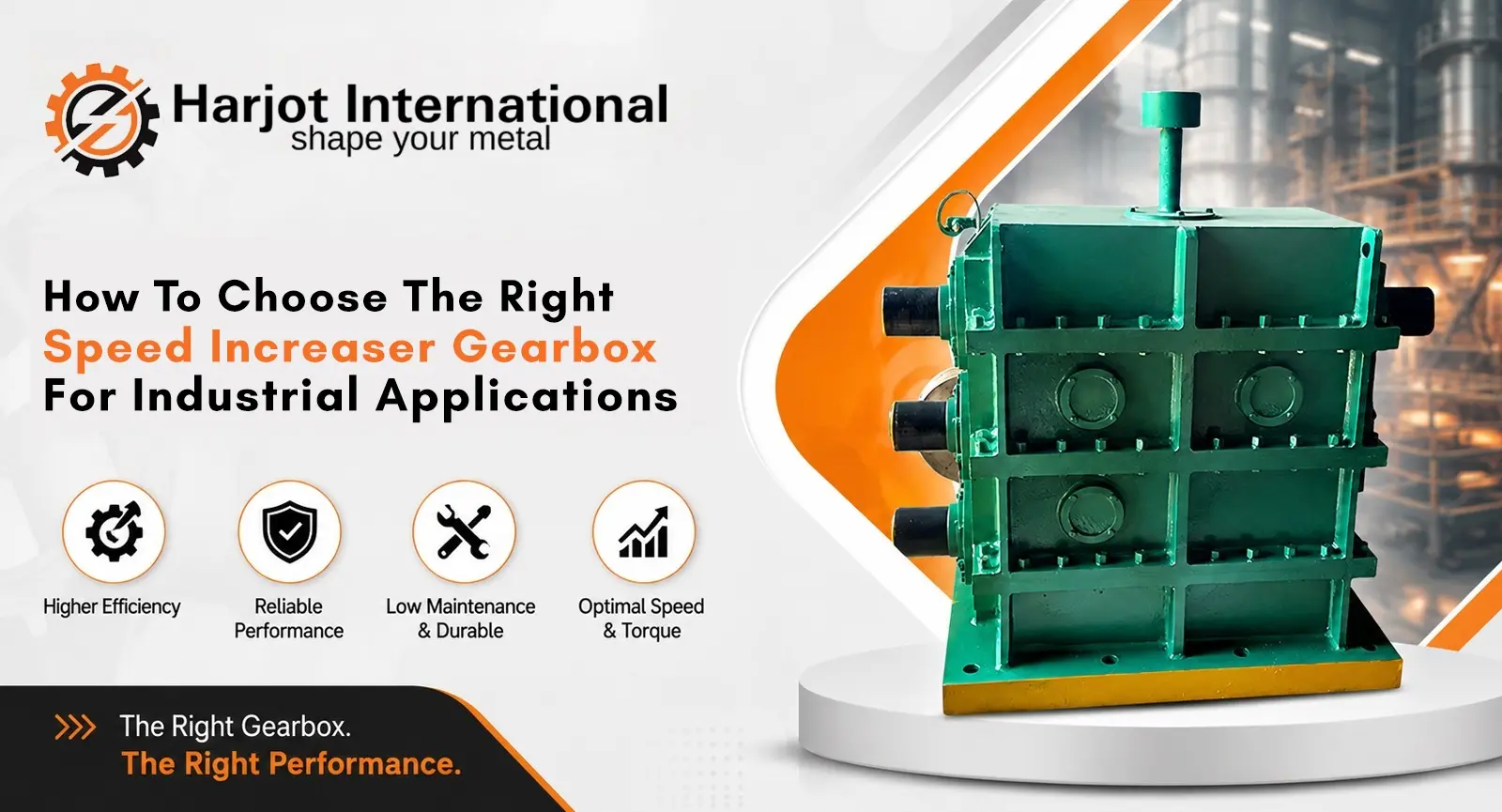
Article summary: This guide explains how to select a speed increaser gearbox based on input speed, output speed, torque, duty cycle, mounting, and application type. It covers common mistakes, thermal limits, lubrication, and maintenance points that affect reliability in rolling mills and other industrial systems.
Introduction
Somewhere on a factory floor, a compressor is spinning faster than the motor driving it ever could on its own. That gap between what the motor delivers and what the equipment needs is bridged by one component most engineers don’t think about until it fails: the speed increaser gearbox. It’s easy to treat this as a simple spec-matching exercise: find a ratio, order the part, move on. But these gearboxes carry more mechanical load per gear tooth than almost anything else on the line, and the units that fail early almost always trace back to a shortcut taken during selection, not a manufacturing defect. If you’re evaluating one for a wind turbine, a hydro setup, a marine drivetrain, or a high-speed compressor, this article walks through what separates a gearbox built to last from one that’s a maintenance headache waiting to happen, starting with the questions worth asking before you look at a single spec sheet.
What Is a Speed Increaser Gearbox?
A Speed Increaser Gearbox is a mechanical device designed to increase the rotational speed from a power source (like a motor or engine) to drive equipment that requires higher RPMs. Speed reducers decrease speed and increase torque while speed increasers do the opposite. They are indispensable where high-speed operation is important.
These gearboxes are commonly used in:
- Pumps and compressors
- Machine tools and spindles
- Fans and blowers
- Power generation systems
Why Choosing the Right Speed Increaser Gearbox Matters
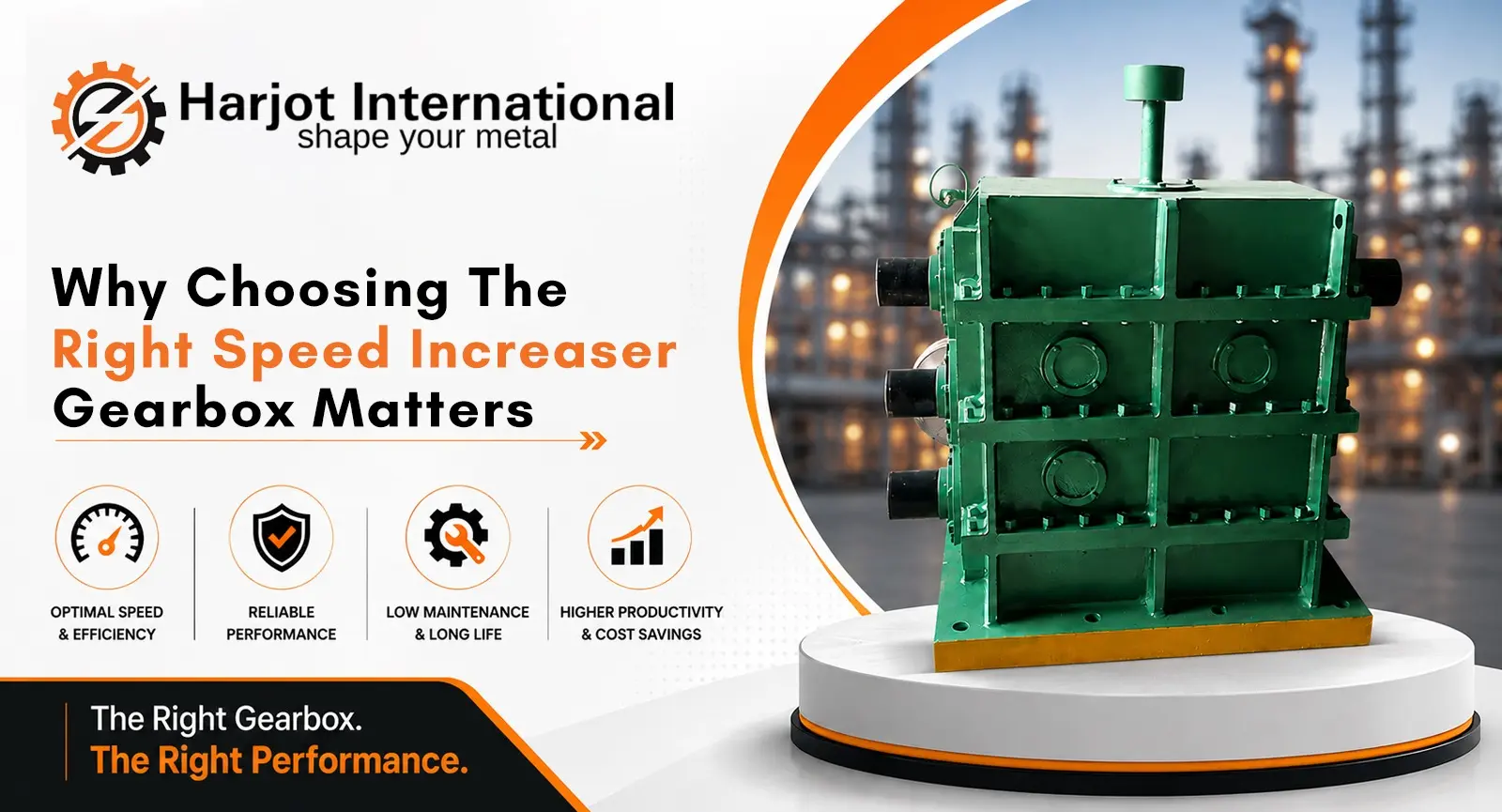
Get the selection wrong, and the consequences don’t show up all at once; they show up gradually, in ways that are easy to blame on other things at first. A gearbox running under the wrong conditions for its design tends to lead to:
- Wear that shows up years earlier than it should, because gears and bearings are absorbing stress they were never sized for.
- Higher energy bills than expected, since an inefficient gearbox wastes power just fighting its own internal losses.
- Downtime that costs far more than the gearbox itself did, because production stops rarely happen on a convenient schedule.
Key Factors to Consider When Selecting a Speed Increaser Gearbox
1. Gear Ratio and Range of Speed
The ratio is the place to start, but it’s hardly the full story. It may look on paper that a 1:4 rated gearbox would be ideal for your speed requirement, but if that gearbox cannot maintain that ratio under your torque load without generating too much heat or wearing out the gears, then you have the wrong gearbox.
2. Torque and Power Rating
Every gearbox has a maximum torque and power rating, and these numbers should always be checked against your system’s peak demand, not just its average operating condition. Manufacturing lines often underestimate momentary torque spikes during startup, and this is one of the most common reasons gearboxes fail early.
3. Efficiency Reductions
Efficiency losses are simply part of how a speed increaser gearbox works; there’s no way around some loss in the conversion process, and it typically falls somewhere between 2% and 5% per stage, depending on the gear type and build quality involved. A helical or planetary design will generally hold onto more of that efficiency than a basic spur arrangement does. This becomes especially important when a gearbox is multiplying speed by a large factor across multiple stages, since those small per-stage losses start to add up fast.
4. Configuration and Orientation of the Mount
Depending on whether the unit needs to be foot-mounted, flange-mounted, or shaft-mounted will determine how it integrates with existing equipment. The retrofitting of another mounting style later can be costly and often requires custom brackets or alignment work that could have been avoided with better planning up front.
5. Carrying life and duty cycle
It is the bearings and not the gears which usually determine the lifespan of a gearbox. The bearing specification for a unit rated for continuous 24/7 operation will differ from that for intermittent use even with the same ratio and housing size.
6. Lubrication Type
Oil-lubricated gearboxes generally can handle higher speeds and higher heat, but grease-lubricated units are easier to maintain in lower-duty applications. If you are running multiple shifts, take a deeper look at oil-based systems that will dissipate heat better during long runtimes.
Troubleshooting Common Speed Increaser Gearbox Problems
Even with proper selection and maintenance, issues can arise. Here’s how to diagnose and address common problems:
| Problem | Possible Cause | Solution |
| Excessive noise | Misalignment, worn bearings, low oil level | Realign, replace bearings, top up oil |
| Overheating | Overloading, insufficient cooling, wrong oil viscosity | Reduce load, add cooling, change oil |
| Oil leakage | Worn seals, overfilling, loose housing bolts | Replace seals, adjust oil level, tighten bolts |
| Vibration | Imbalance, misalignment, foundation issues | Balance rotating parts, realign, reinforce mounting |
| Reduced output speed | Slippage, worn gears, incorrect ratio | Inspect coupling, replace gears, verify ratio |
Early detection and corrective action prevent minor issues from becoming major failures.
Conclusion
Choosing the right speed increaser gearbox really comes down to one thing: matching it accurately to your actual operating conditions, not just the closest number on a spec sheet. Ratio, torque, environment, duty cycle- all of it matters more than price alone. Get this right, and the equipment quietly does its work for years. At Harjot International, that’s exactly the thinking behind every gearbox built, engineered to handle real industrial demands, not just pass a spec check.
FAQs
How is a speed increaser gearbox different from the reducer gearbox I already know?
My gearbox is running hotter than it used to, is that something I should worry about?
Can I just size a speed increaser gearbox off my average operating load?
How do I know if I need forced circulation lubrication instead of standard splash lubrication?
Is it worth paying more for a better speed increaser gearbox, or are they all roughly the same once you're in a similar price range?

Harjot International
With over 25 years of experience, Harjot International, based in Punjab, India, has built a strong reputation as a trusted provider of heavy industrial machinery.