

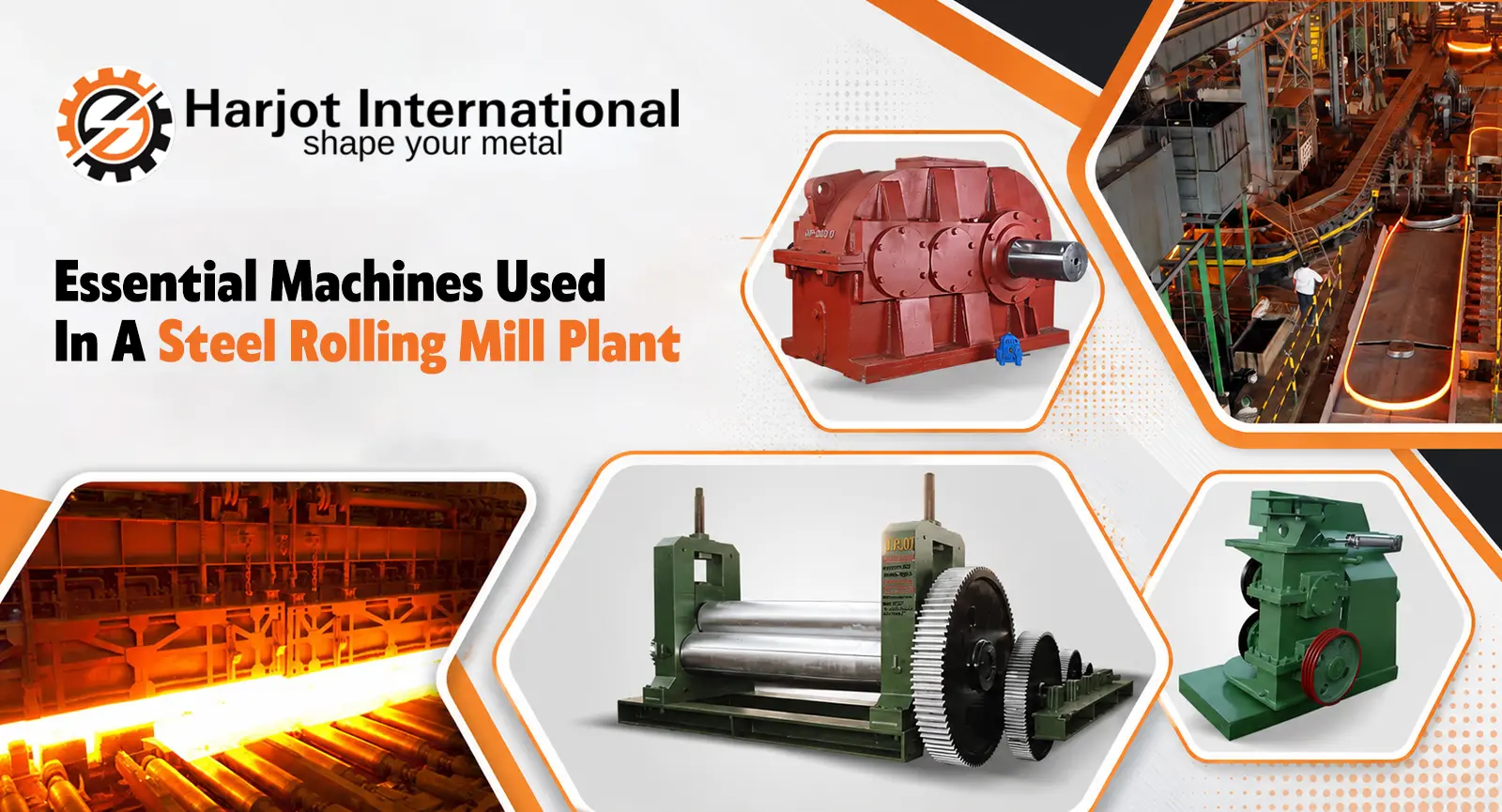
Overview – A Steel Rolling Mill plant is not a single machine but a coordinated line of equipment, each piece responsible for one stage of turning a raw steel billet into a finished bar, rod, or section. Reheating furnaces, roll stands, gearboxes, shearing units, and straightening machines each play a specific role, and a weak link anywhere in that sequence shows up as poor finish, inconsistent sizing, or costly downtime. This post covers the essential machines that make up a steel rolling mill plant, what each one does, and why the sequence matters.
The Reheating Furnace
Before any rolling happens, the billet is heated to a temperature where the steel becomes plastic enough to deform without cracking, typically 1100°C to 1250°C depending on the grade. A Furnace that heats unevenly sends inconsistent material into the roll stands, and no amount of correction downstream fully fixes that.
Roll Stands and the Reduction Process
Once heated, the billet passes through a series of roll stands arranged in sequence, each reducing the cross-section a little further and shaping the material closer to its final profile:
- Roughing stands – take the first, heaviest reduction from the raw billet
- Intermediate stands – continue reducing size and refining shape
- Finishing stands – bring the product to its final dimension and surface finish
A modern Steel Rolling Mill typically handles:
- Wire rods from 5.5 mm to 9 mm
- Rebar from 8 mm to 40 mm
- Plain rounds up to 250 mm
- Structural sections including angles, channels, and beams
All of these go through the same progressive rolling principle, just with a different number of stands and pass design.
The Reduction Gearbox
Every roll stand needs power delivered at the right speed and torque, and that is the job of the reduction gearbox. Rolling mills need high torque at relatively low RPM, which is the opposite of what a standard motor produces on its own. A Reduction Gearbox steps that speed down and multiply torque, matching motor output to what the rolls need to bite into hot steel and reduce it.
Gearbox type and material both affect how it holds up in service:
- Helical reduction gearboxes – the most common choice for rolling mills, chosen for their efficiency at high torque levels
- Worm gearboxes – suited to lower horsepower requirements at slower speeds
- Gear material – components in EN-9, EN-24, or high-carbon, high-chrome steel hold up better under the repeated shock loading rolling puts on them
A gearbox undersized for the application wears out early and becomes an expensive part of the line to replace.
The Shearing Machine
As the rolled product moves down the line, it needs to be cut to length, and that is where the shearing machine comes in. A Shearing Machine applies force through a pair of blades — one fixed and one moving — to cleanly separate the material without the tearing a saw cut can leave behind.
In a rolling mill, shears handle two main jobs:
- Cropping the leading and trailing ends of a rolled section, which are rarely usable due to shape irregularities
- Cutting the finished product to length once it meets specification
Flying shears cut material while it continues moving through the line, keeping the process continuous instead of stopping the mill for every cut.
The Straightening Machine
Hot-rolled products rarely come off the last stand perfectly straight. Uneven cooling and residual stress cause bends and twists that need correcting before dispatch. A Straightening Machine applies controlled bending force through a series of rolls – configurations ranging from 2-roll to 13-roll depending on section size – to progressively realign bars, angles, and channels to true straightness. This stage determines whether the finished product meets dimensional tolerance, and it is usually the last mechanical process before inspection and packing.
Harjot International, an ISO 9001:2015-certified company based in Mandi Gobindgarh, Punjab, has been manufacturing steel rolling mill machinery since 2010 under the leadership of Mr. Daljit Singh.
The range includes:
- Complete rolling mill plants
- Reduction gearboxes
- Shearing machines
- Straightening machines
All are built to Indian standards for fitting and assembly. For details on any of these machines or a complete plant setup, get in touch with the Harjot International team.
Frequently Asked Questions
How many roll stands does a typical steel rolling mill need?
Why does a rolling mill need a reduction gearbox instead of connecting the motor directly to the rolls?
Is a straightening machine necessary for every product, or only certain sections?
What causes a shearing machine to leave a rough or torn edge instead of a clean cut?

Harjot International
With over 25 years of experience, Harjot International, based in Punjab, India, has built a strong reputation as a trusted provider of heavy industrial machinery.